
The year I stopped translating myself for people who were never going to read it.
There's a particular kind of tired that has nothing to do with sleep. It comes from explaining yourself.
Not sharing. Not talking. Explaining. That extra shift you pull after you've already said the thing, where you go back and make it palatable, soften the edges, add the context that keeps anyone from being uncomfortable. I worked that shift for about thirty years. And somewhere in the last couple of them, I put down the clipboard and walked out.
Here's what the explanation used to look like, in case you recognize yourself.
My thoughts. I turned every opinion into a question. I have a lot of them, and I had learned to serve them with a little curtsy on the end, so nobody would have to disagree with me directly. Don't you think? Maybe I'm wrong, but. I wasn't asking. I was pre-apologizing for taking up conversational space. These days I say the thing, and then I let it sit there. It turns out a sentence can just end.
My body. This one took the longest. I used to narrate it before anyone else could, get out in front of it, mention the weight or the tiredness or the gray coming in at the temples so I could be the one who said it first. As if by pointing at myself, I could control what anyone did with it. I don't do the narrating anymore. Nobody was asking. This body carried two kids and a couple of hard decades, and it gets me down the hall to the coffee pot every morning, and it does not owe anybody an introduction.
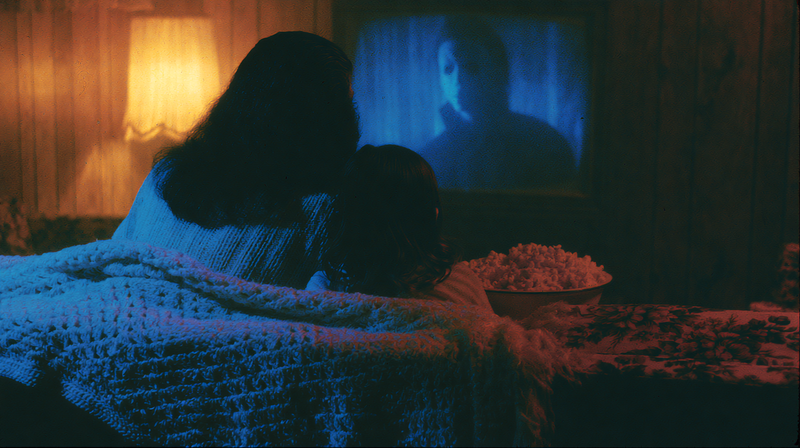
My ideas. The strange ones especially. I have always had ideas that don't sound good out loud, and for years I kept most of them to myself, because the explaining they required was more than they were worth. Case in point: a blog about motherhood and grief and horror movies. Try pitching that at a dinner party. I used to bury that kind of thing. Now I build it.
What changed wasn't one moment. Nobody hands you a certificate. It was more like an accumulation, until the math finally became obvious.
The math is this. Being understood is lovely. Needing to be understood is a leash.
For most of my life I treated other people's comprehension like a requirement, like my thoughts and choices weren't fully real until somebody else confirmed the reading. And that put my whole life in other people's hands, which is a strange thing to do with your one life. It also meant that whenever someone didn't get it, I read it as a failure on my part. I'd go back and explain again, more carefully this time, in smaller words.
Here's what I know at 46. Some people are never going to get it. Not because you explained it badly. Because they're not your audience. That isn't a failure; it's information, and it's actually useful information as soon as you stop taking it personally.
And this is the part nobody warns you about: when you stop translating, you find out who was actually reading the whole time. The people who understood me plainly, without the footnotes, had been standing there for years. I just couldn't see them past all the explaining.
I write here all the time about how there's a kind of dark that isn't the bad kind. This is one of those. I stopped turning on all the lights whenever someone came over. I have rooms in me that are dim and strange and mine, and I don't give the tour anymore. The people who belong here find their way around just fine.
If you're still pulling that shift, I want to give you the one line I'd put on a sticky note. You do not have to be understood in order to be right about your own life.
Say the thing. Let it end. Take the seat. Some of them will get it, and those are your people, and the rest were never going to, no matter how many times you said it slower.
Forty-six is not too late to stop performing. That's actually right about when the show closes on its own, if you let it.